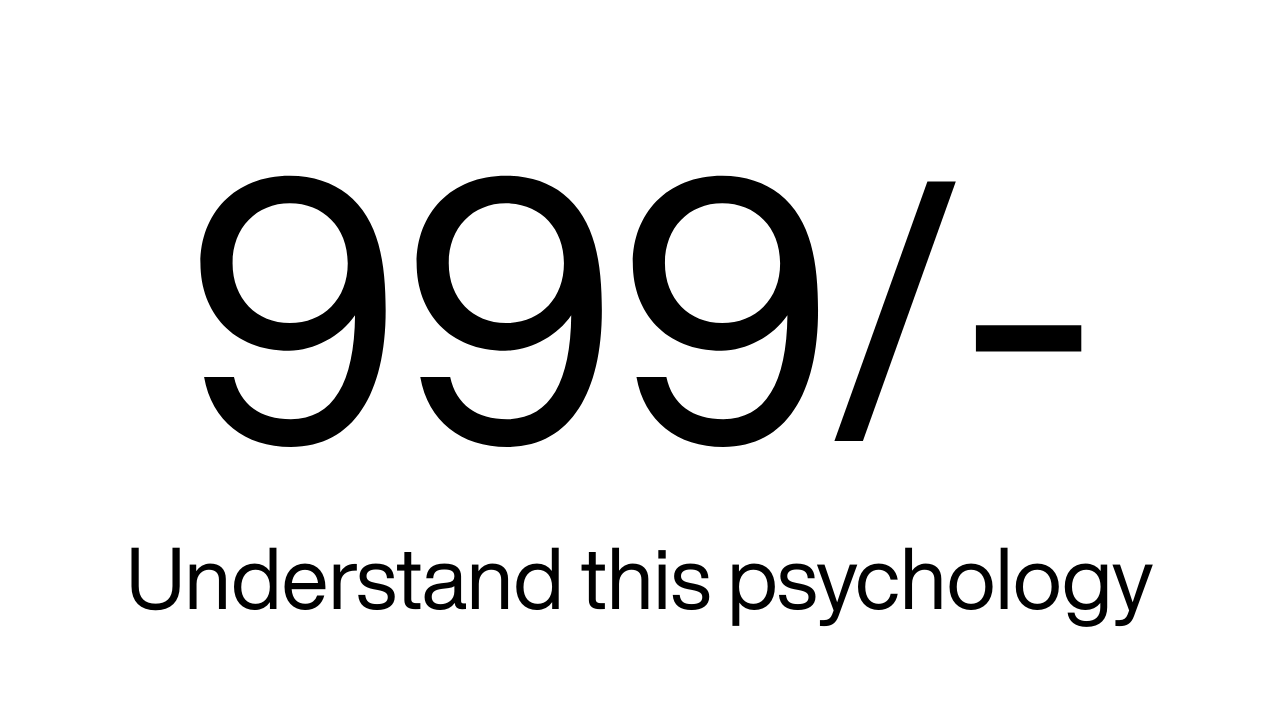
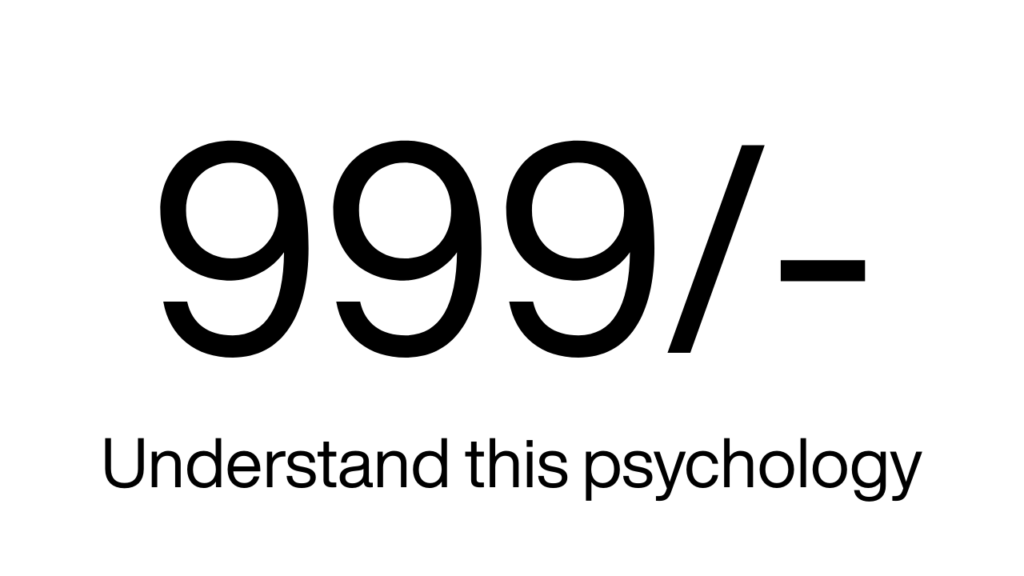
₹999/-
Save ₹1.
Logically, this makes no sense.
Psychologically, it works frighteningly well.
This tiny pricing trick has been used for decades across retail, SaaS, ecommerce, food menus, and digital products. Not because marketers love odd numbers, but because the human brain does.
Welcome to the psychology of ₹999 pricing.
Why ₹999 Feels Cheaper Than ₹1,000
From a math perspective, ₹999 and ₹1,000 are almost identical.
From a consumer behavior perspective, they live in two different mental worlds.
The reason lies in how our brains process numbers.
Humans read numbers from left to right. The first digit sets the tone.
₹999 starts with a 9.
₹1,000 starts with a 1.
The brain subconsciously categorizes prices before fully analyzing them.
₹999 gets stored as “900 something”
₹1,000 gets stored as “thousand”
This effect is called the left-digit bias.
Your brain stops early. Not because it’s lazy, but because it’s efficient.
The Left-Digit Effect Explained Simply
When consumers see ₹999, the brain anchors on the first digit.
9 feels significantly lower than 10.
Even though the actual difference is ₹1.
This shortcut saves mental energy. In a world overloaded with choices, the brain loves shortcuts.
Marketers don’t exploit this. They design for it.
Emotional Buying vs Logical Justification
Here’s the uncomfortable truth.
People don’t buy rationally.
They buy emotionally and justify logically.
₹999 feels like a deal.
₹1,000 feels like a commitment.
Once the emotional decision is made, logic steps in later with explanations like:
“It’s under a thousand.”
“It’s still affordable.”
“It’s basically the same thing.”
The decision was already taken.
Why This Works Across Industries
The ₹999 strategy works because it taps into universal psychological patterns.
Ecommerce products priced at ₹999 convert better than ₹1,000
Subscription plans at ₹999 per month feel lighter than ₹1,000
Restaurant menus use ₹99 or ₹199 for the same reason
Online courses at ₹4,999 feel safer than ₹5,000
This isn’t coincidence. It’s consumer psychology at scale.
Cognitive Bias Behind ₹999 Pricing
Several psychological biases work together here.
Anchoring bias
The first number seen becomes the reference point.
Loss aversion
Crossing into a higher price bracket feels like a loss, even if minimal.
Perceived value bias
Odd prices feel more calculated and intentional. Rounded prices feel heavier.
Mental accounting
People categorize ₹999 differently from ₹1,000 in their internal budgets.
Together, these biases quietly push consumers toward a “yes”.
Is ₹999 Pricing Manipulation?
Short answer: No.
Long answer: It depends on intent.
If the product delivers real value, ₹999 pricing simply reduces friction.
If the product is weak, pricing tricks might get one sale, but not trust.
Good marketing respects psychology.
Bad marketing abuses it.
Ethical pricing aligns perception with value, not deception.
When ₹999 Pricing Works Best
₹999 pricing performs best when:
The audience is price-sensitive
The product is an impulse or semi-impulse buy
The difference between alternatives is emotional, not functional
The buyer is comparing multiple options quickly
For luxury brands, rounded pricing often works better.
For mass-market and digital products, odd pricing wins.
Context matters.
What Marketers Should Learn From This
The lesson isn’t “always use ₹999”.
The lesson is this:
People don’t experience prices objectively.
They experience them psychologically.
Great marketing doesn’t fight human behavior.
It designs around it.
Understand how people think.
Then price, position, and communicate accordingly.
Final Thought
₹1 never changed the price.
It changed the feeling.
That’s the real power of consumer psychology.
If you want better conversions, better ads, and better offers, stop thinking like a calculator and start thinking like a human.
Because your customers already are.